
Eagle Loan Collateral: What You Can Use & How It Affects Your Rate
Every Eagle Loan is a secured loan — meaning collateral is always required. For many borrowers, this is the first time they've encountered a secured personal loan, and it raises important questions: What counts as collateral? How much collateral do I need? And what actually happens if I can't pay?
As a former loan officer who worked in Ohio and Kentucky community banking for a decade, I've seen how collateral decisions play out for real borrowers. Here's what you need to know before you apply.
Why Eagle Loan Requires Collateral
Eagle Loan serves borrowers that banks often turn away — people with damaged credit, thin credit files, or recent bankruptcies. To take on that additional risk, they require a secured loan structure. The collateral gives Eagle Loan a legal claim to an asset if you default, which lets them approve borrowers they otherwise couldn't.
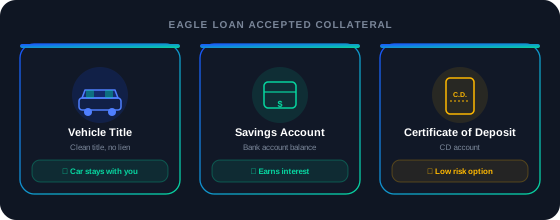
Accepted Collateral Types
| Collateral type | Requirements | Strength rating |
|---|---|---|
| Vehicle title Car, truck, motorcycle, RV |
Must own outright or have significant equity. Clean title required. Vehicle typically must be valued above the loan amount. | Strong |
| Savings account Bank or credit union |
Account balance pledged as security. Account may be restricted during loan term. Balance should cover loan amount. | Strong |
| Certificate of deposit (CD) Bank-issued CD |
CD value secures the loan. Early withdrawal penalties apply if CD is liquidated during default. | Good |
The most common collateral by far is a vehicle title. Most borrowers who come to Eagle Loan own a vehicle but don't have liquid savings — making the vehicle title the practical option for the vast majority of applicants.
How Collateral Affects Your Rate
Eagle Loan doesn't publish its APR range, but from industry experience and customer reports, stronger collateral consistently results in better terms:
Higher value collateral
- ✓ Lower risk for lender
- ✓ Likely lower interest rate
- ✓ Higher loan amount possible
- ✓ Better approval odds
Lower value / older collateral
- → Higher perceived risk
- → Higher interest rate possible
- → Lower loan ceiling
- → May require co-applicant
What Happens If You Default?
If you stop making payments on your Eagle Loan, the lender has the legal right to pursue your collateral. Here's what the process typically looks like:
Missed payment — contact your branch immediately
Eagle Loan emphasizes contacting them at the first sign of financial difficulty. Their community-oriented approach means they may be able to work out a modified payment plan before taking further action.
Collection process begins
If payments remain missed, the account enters collections. This typically involves phone contact, written notices, and potential credit bureau reporting of the delinquency.
Collateral claim
As a last resort, Eagle Loan can pursue the collateral you pledged. For vehicle titles, this means repossession. For savings accounts, the pledged funds may be applied to the outstanding balance. This process follows state law in Indiana, Kentucky, or Ohio.
The key takeaway: Don't borrow against your vehicle if losing it would make your situation worse. If your car is essential to getting to work, losing it to repossession turns a financial problem into a financial crisis. Only pledge collateral you could realistically survive losing.
Tips for Choosing the Right Collateral
Use savings if you have it
A savings account as collateral is lower-risk than a vehicle. You keep use of your car, and if you default, the lender takes money — not transportation.
Newer vehicles = stronger collateral
A newer, higher-value vehicle gives Eagle Loan more security and may result in better terms. A 15-year-old car with high mileage offers weaker collateral.
Have your title ready
If using a vehicle, make sure you have the physical title and it's clean (no liens from other lenders). A title with an existing lien complicates or prevents using it as collateral.
Ask before you apply
Call your local branch before applying. Describe your collateral and ask whether it's sufficient for the amount you need. This avoids a hard credit pull for a loan you won't qualify for.
About the Author
Sarah K. Odom is EagleLoansApp's Loan Products Analyst. She spent 10 years as a loan officer at community banks in Ohio and Kentucky before transitioning to financial content writing. She specializes in secured lending, collateral assessment, and consumer credit. Learn more →